AutoMapper 16.1 and MediatR 14.1 Released
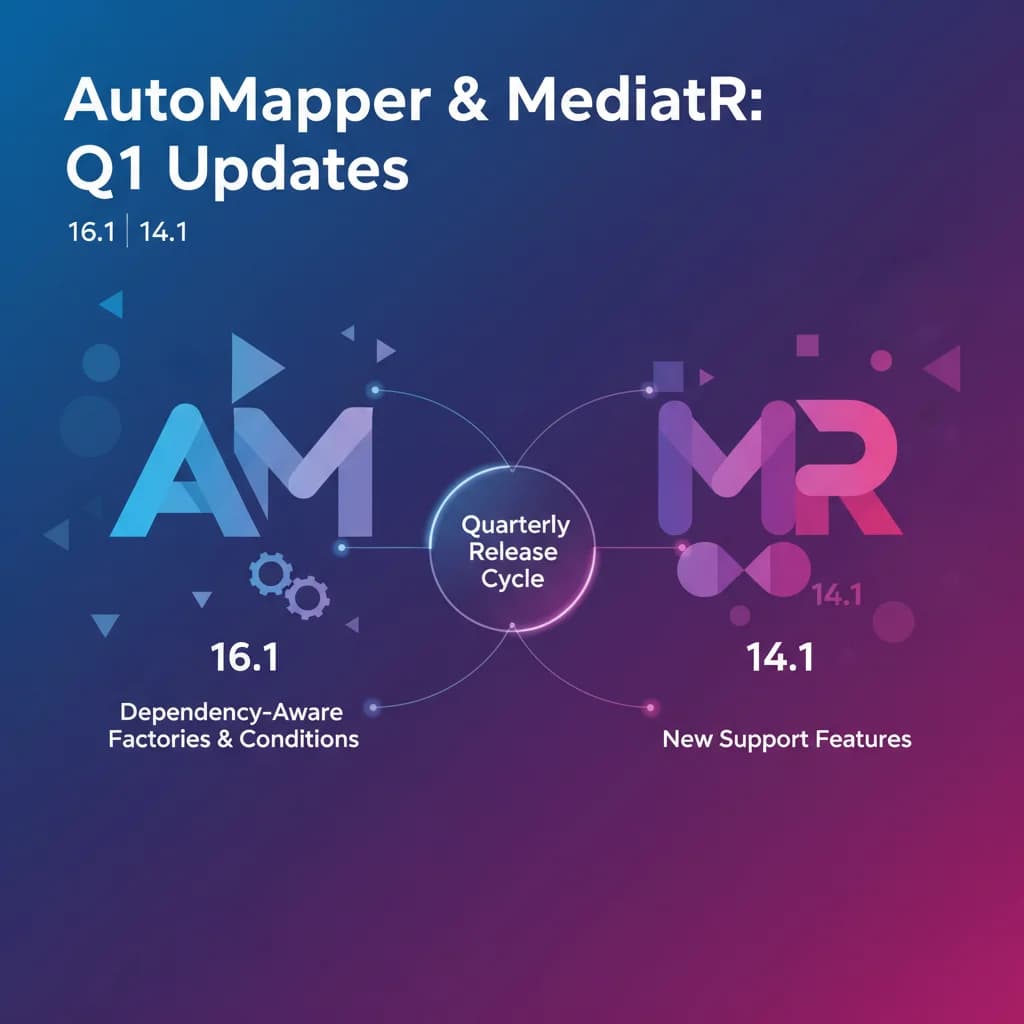
Today marks another quarterly release for two of the most widely used libraries in the .NET ecosystem — AutoMapper 16.1 and MediatR 14.1. These regular quarterly releases continue to deliver meaningful improvements while maintaining the stability that teams depend on in production.
Let's take a look at what's new.
AutoMapper 16.1
The headline feature in AutoMapper 16.1 is the ability for factories and conditions to use dependencies. Previously, these were limited to Func-based callbacks, which meant you couldn't easily leverage registered services or other dependencies within your mapping configuration.
This is a significant quality-of-life improvement. In real-world applications, mapping logic often needs to consider external factors — feature flags, user context, configuration values — that live in your DI container. Before this release, you'd have to work around the limitation with awkward patterns or resort to custom resolvers for what should be simple conditional logic.
Now, you can write more expressive and maintainable mapping configurations that naturally integrate with your application's dependency injection setup.
Full details are available in the AutoMapper 16.1.0 Release Notes.
MediatR 14.1
On the MediatR side, version 14.1 continues the library's evolution as the go-to mediator implementation for .NET applications. This release adds new support capabilities that further streamline the request/response pipeline that so many .NET projects rely on.
MediatR has become a foundational building block for implementing the mediator pattern, CQRS, and clean architecture in .NET. Each release focuses on making the library more flexible while keeping the API surface clean and intuitive.
Check out the MediatR 14.1.0 Release Notes for the full changelog.
The Value of Quarterly Releases
It's worth noting the shift to a regular quarterly release cadence. This approach strikes a good balance between delivering new features and maintaining stability. Teams can plan their upgrade cycles around predictable release windows, and library maintainers can batch changes into well-tested releases rather than pushing out frequent minor patches.
For teams using these libraries in production, a quarterly cadence means:
- Predictable upgrade windows — you know when to expect new versions
- Batched changes — fewer upgrade cycles to manage per year
- Better tested releases — more time for changes to bake before shipping
- Clearer migration paths — release notes are comprehensive rather than fragmented
Upgrading
Both packages are available on NuGet now. If you're already on the 16.x and 14.x lines respectively, upgrading should be straightforward:
dotnet add package AutoMapper --version 16.1.0
dotnet add package MediatR --version 14.1.0
As always, review the release notes for any behavioral changes, and run your test suite after upgrading. The dependency-aware factories and conditions in AutoMapper, in particular, open up new patterns that may let you simplify existing custom resolver code.
Looking Ahead
Both libraries continue to evolve alongside the .NET ecosystem. With .NET continuing its rapid development pace, having foundational libraries that keep up with quarterly updates ensures the community can take advantage of new platform features without waiting for major version bumps.
If you're using AutoMapper or MediatR in your projects, now is a great time to evaluate the new features and see how they can improve your codebase. The release notes linked above provide full details on every change included in these releases.